Ferrari’s Bold Approach Under Loic Serra: Navigating the Grey Areas of Formula 1 Regulations
Ferrari, the iconic Scuderia known for its illustrious history in Formula 1 racing, is once again capturing the attention of motorsport fans and analysts alike. This renewed interest can largely be attributed to the innovative mindset of Loic Serra, the French technical director who has taken the helm of Ferrari’s engineering team. Under his guidance, Ferrari is showcasing a willingness to push the boundaries of Formula 1’s complex regulations, engaging in an audacious exploration of what many consider the “grey areas” of the sport.
Reviving a Vision
This approach echoes the vision once championed by the late Sergio Marchionne, who believed that Formula 1 should be a platform for unrestricted technological creativity rather than a strict adherence to regulations that might stifle performance. Marchionne famously advised the engineering teams to consider risks inherent to experimenting within the parameters of the rules, positing that “out of a hundred borderline solutions, some may be banned, but the others will remain on the car.” His mantra emphasizes the competitive spirit of F1, advocating for the relentless pursuit of innovation.
It is in this context that Ferrari’s recent technical developments should be viewed. With an overarching philosophy to exploit every possible advantage, the team returns to its roots, aiming for solutions that could yield breakthroughs on the racetrack.
The Controversial Fin
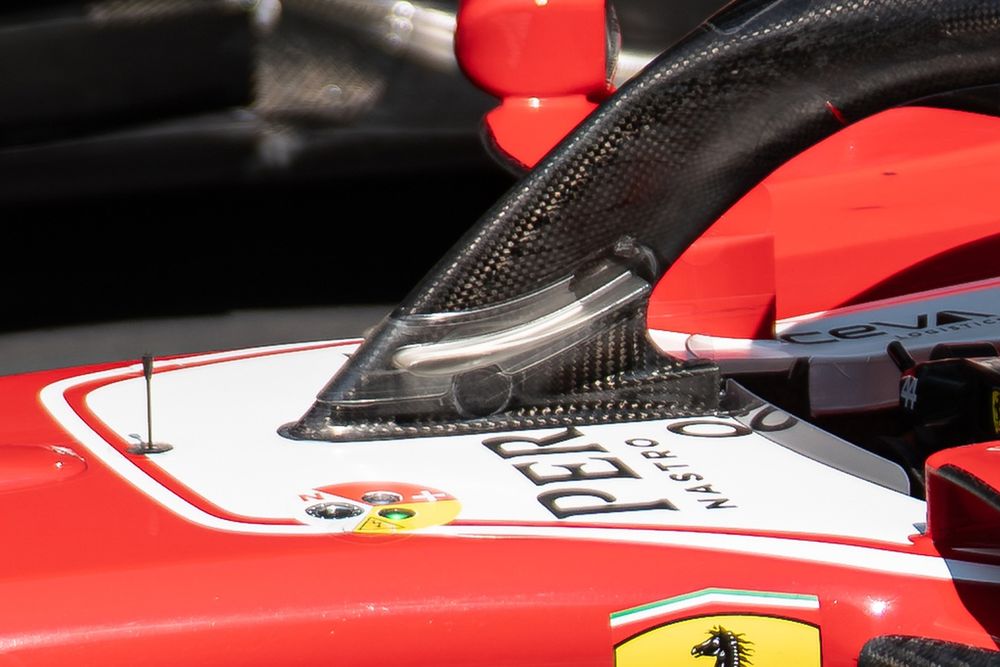
One fascinating example of this new direction took place during the recent Chinese Grand Prix. Ferrari introduced a small fin mounted on the front pillar of the Halo device, alongside what observers dubbed the ‘Macarena wing’, which had fans buzzing. Although the fin made its dazzling debut during practice and sprint qualifying sessions, it was curiously absent during the official race and main qualifying rounds. This curious move excited commentators and spectators, eager to see how Ferrari would leverage cutting-edge designs to gain a competitive edge.
However, the excitement was tempered when reports surfaced from The Race suggesting that the FIA (Fédération Internationale de l’Automobile) raised concerns regarding the legality of the fin. Initially approved by technical scrutineers, including Jo Bauer, the fin’s legitimacy came into question after rival teams indicated their intent to file a protest. This raised the stakes, prompting Ferrari to reconsider its strategy. Ultimately, they opted to remove the fin before Saturday’s qualifying session, prioritizing a consistent performance over the potential marginal gains the fin could provide.
Strategy Over Risk
Ferrari’s decision to abandon the fin illustrates a more prudent approach intertwined with their innovative ambitions. The team weighed the fin’s potential advantages against the risks of disruptions in their race strategy. They calculated that the fin might only yield marginal improvements—tenths of a second in performance—which, when balanced against achieving crucial qualifying positions, proved an unwise gamble.
The fin, although seemingly innocuous, was designed to manipulate airflow within the cockpit area—an innovative, if controversial, use of aerodynamics. Constructed from plastic rather than metal, it strayed from the traditional design ethos of being a structural element of the Halo device. Instead, it served a purpose akin to that of a windscreen, demonstrating Ferrari’s forward-thinking approach even as they navigated regulatory uncertainties.
The Bigger Picture: Innovation in Formula 1
This balancing act reflects a broader narrative within Formula 1, where innovation and regulation often coexist uneasily. Teams continuously search for ways to enhance performance within the allowable framework, forcing governing bodies to adapt and respond to the ever-evolving landscape of automobile technology. What one team might deem a strategic innovation could easily be perceived as circumventing the spirit of the rules by another.
For Ferrari, this episode is emblematic of the challenges and opportunities that come with embracing a culture of innovation. As they tread the fine line between ingenuity and compliance, the Scuderia aims to reclaim their status as front-runners in a fiercely competitive arena that demands both speed and strategic prudence.
The Road Ahead
As the season unfolds, all eyes will remain fixed on Ferrari’s journey. The technical decisions made today will likely influence the landscape of Formula 1 racing for years to come. Under the savvy leadership of Loic Serra, the team embodies a refreshing blend of boldness and caution. Exploring the realms of design within legal limits might pave the way for groundbreaking advancements, which could significantly transform not just Ferrari’s fortunes but the sport as a whole.
The challenges of any sport require teams to be both innovative and tactical. Ferrari’s current strategy reflects a commitment to returning to the fore, blending respect for the historical significance of the brand while reimagining what is possible within the world of high-speed competition.
So, as fans hold their breath in anticipation of what each race will reveal, it is clear that the Scuderia has embarked on an ambitious path that could redefine their legacy—an inspiring journey of risk, innovation, and unwavering determination.