MotoGP’s Return to Brazil: A Bumpy Ride and Future Improvements
After a long hiatus, the MotoGP series made its much-anticipated return to Brazil, bringing excitement and enthusiasm to fans and participants alike. However, the event was marred by significant issues, including track surface problems and weather-related challenges, all of which have prompted MotoGP to conduct a thorough investigation. In an official statement, MotoGP has pledged to rectify these concerns ahead of the next Brazilian Grand Prix set for 2027.
The Challenges Faced During the Brazilian Grand Prix
The Brazilian Grand Prix, held recently at the Autódromo Internacional de Goiânia, aimed to reignite the passion for motorcycle racing in a country that has not hosted MotoGP for two decades. However, the event was overshadowed by an array of complications. Less than two days after the race weekend concluded, MotoGP’s race direction issued a comprehensive statement addressing the various issues that arose during the event.
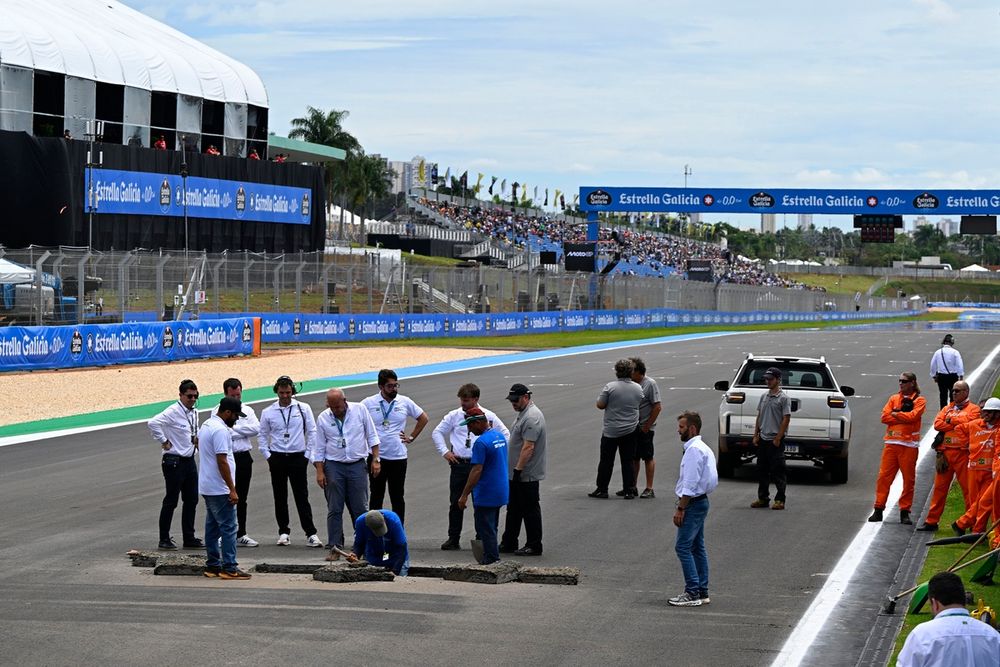
One of the most pressing concerns was the appearance of a sinkhole on the start/finish straight, resulting from the collapse of an undocumented old sewage system beneath the surface. This unexpected defect was fortunately located off the racing line, reducing the immediate danger to riders. Circuit workers responded swiftly, allowing track activities to resume, albeit with considerable delays. The delay pushed the sprint race start time back by 80 minutes and postponed Moto2 qualifying to Sunday morning.
Asphalt Woes and Weather Impact
In addition to the sinkhole, the MotoGP organization noted that localized asphalt degradation was observed at Turn 11 and 12. This deterioration was attributed to significant heat and track activity that compounded after the Moto2 and Moto3 races. While workers cleared all excess aggregate from the circuit prior to the marquee race, there remained a “small risk of continued degradation,” leading to the decision to shorten the race by eight laps. The revised race distance of 23 laps constituted 75% of the original count, thereby allowing for maximum points to be awarded.
Further complicating matters was the unprecedented rainfall in the lead-up to the event. This weather not only contributed to surface issues but also hampered final preparations at the circuit. These elements raised questions regarding the quality of the newly laid asphalt, which was a point of concern during the resurfacing of the track in Goiânia.
Commitment to Improvement
In light of these challenges, MotoGP’s full statement emphasized that extensive investigations had been initiated to understand the causes of the problems better. The circuit and race promoters recognized that the extreme weather conditions played a significant role, particularly in relation to the final preparations leading up to the event.
The statement outlined the timeline of events, mentioning that while the sinkhole’s emergence on Saturday posed a significant challenge, swift action by track personnel allowed for continued operations later in the day. On Sunday, the localized asphalt degradation became apparent after the conclusion of Moto2, and although measures were taken to clear excess aggregate, concerns lingered regarding the surface’s integrity as the MotoGP race approached.
The Path Forward
MotoGP’s homologation process for circuits, overseen by the Fédération Internationale de Motocyclisme (FIM), typically begins well in advance of the races. This process involves rigorous inspections of construction and material for the racing surface. Each circuit requires a tailored asphalt mix and laying procedure, decided by the local circuit and presented to the FIM to comply with safety standards. Motor racing fans and stakeholders highlighted the need for better attention to local conditions and more comprehensive assessments in future events to ensure the quality and safety of the racing surface.
By acknowledging the shortcomings of its recent return to Brazil, MotoGP remains committed to correcting these issues and ensuring a better experience for riders, teams, and fans alike. Plans will be put in place to prevent a recurrence of the problems faced during this year’s event, further solidifying MotoGP’s commitment to safety and quality.
A Bright Future for MotoGP in Brazil
Despite the challenges faced during the Brazilian Grand Prix, attendance at the event was remarkable, with 148,384 fans flocking to the Autódromo Internacional de Goiânia to witness the spectacle. This turnout underscores the enduring appeal of MotoGP in Brazil and highlights the potential for global growth in the sport. Drawing in passionate fans demonstrates not only market viability but also the opportunity for further investment and development in motorcycle racing within Brazil.
As MotoGP gears up for its future events, the experiences from the Brazilian Grand Prix will serve as a significant learning opportunity. The series shows its dedication to improving the racing experience and implementing lasting changes that will resonate with fans and competitors alike. As preparations move forward for the next race in Brazil, the MotoGP community remains optimistic about what the future holds and excited for the unparalleled thrill of motorcycle racing.
In conclusion, while the return to Brazil was not without its hurdles, MotoGP’s commitment to resolving these issues suggests a promising trajectory. Riding on the wave of enthusiasm generated by the recent event, all stakeholders are keen to ensure that MotoGP’s next appearance in Brazil not only meets but exceeds the high expectations of its dedicated fanbase. With a concerted effort to address the challenges presented, the future of MotoGP racing in Brazil is bright indeed.