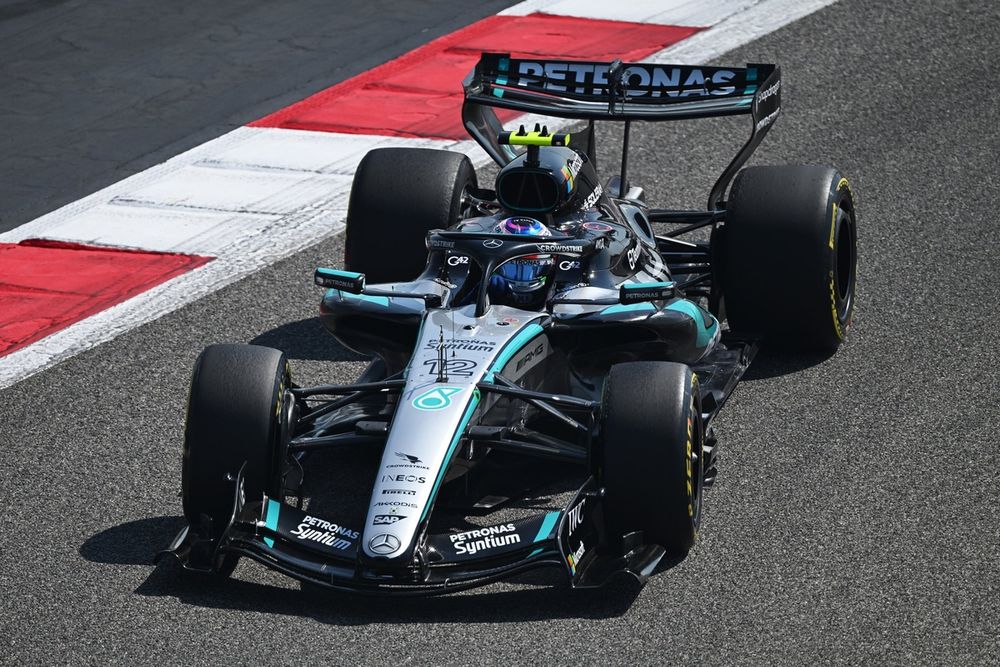
Kimi Antonelli’s Triumph Amidst Start Challenges at the Japanese GP
In a thrilling display of skill and resilience, Kimi Antonelli emerged victorious at the Formula 1 Japanese Grand Prix, despite encountering a rocky start. The young Mercedes driver, who had qualified on pole, experienced a troublesome launch that saw him slip from pole position to sixth by the end of the opening lap at the iconic Suzuka circuit.
A Rocky Start
Antonelli’s performance off the line was marred by excessive wheelspin, a mishap he candidly attributed to his own misjudgment. “It was completely my fault,” Antonelli explained, reflecting on his start. “I dropped the clutch a bit too deep, deeper than what I should have. The tyres were also a bit colder than anticipated, which led to losing a lot of places. It’s certainly an area where I need to improve.”
Despite this setback, the 19-year-old managed to regain his composure throughout the race. His determination fueled a comeback, and when a safety car was deployed on lap 23, it played to his advantage. This timely intervention allowed him to recover significantly and challenge for the lead once more.
Seizing the Opportunity
“When the safety car came out, I felt we were really lucky with the timing,” Antonelli noted. “Our pace was very strong afterward, and I’m really happy with how we managed the race from that point on.” Indeed, his ability to capitalize on circumstances was a testament to his skill and strategic thinking.
With this victory, Antonelli not only celebrated his second consecutive win but also took command of the F1 Championship standings. This achievement stands out especially given that starts have consistently been a point of contention for him this season. Earlier in 2026, he lost positions on the opening laps in both the Melbourne and Shanghai races, showcasing a pattern that he is keen to address moving forward.
Reflections After the Race
Post-race, Antonelli expressed a mix of emotions—elation from his win yet disappointment regarding his initial performance. “It’s a special win at a very unique track,” he mentioned. “However, there’s a real necessity to focus on improvement. I’m just making my life a lot harder with these start issues. There’s definitely still a lot of work to do.”
The evolution of his performance during the race is noteworthy, as he displayed not only his speed but also the strategic acumen necessary to work his way back to the front. This potential for growth is a bright sign for both Antonelli and the Mercedes team.
The Changes in Race Starts
Moreover, the 2026 regulations have introduced more complexity into the race start procedure, which may be contributing to some of the challenges drivers like Antonelli face. The removal of the MGU-H has necessitated a higher engine rev for an extended period before the start. This change requires drivers to balance revving the engine while ensuring battery power conservation, which increases the difficulty of executing a flawless launch.
Mercedes team principal Toto Wolff remarked on the situation, emphasizing the learning curve young drivers face. “These kids learn in driving schools with automatics, so we need to teach them how to release a clutch slowly, steadily, and not too quickly,” he stated with a hint of humor during an interview. Despite the botched start, Wolff praised Antonelli’s speed and determination: “He was fast. We’re not giving them the easiest of tools, and our race starts have generally been on the mediocre side.”
Challenges Beyond Antonelli
Race start woes aren’t exclusive to Antonelli. His teammate, George Russell, has also struggled, notably losing several positions on the opening laps in 2026. This shared challenge highlights a broader issue within the team that necessitates focused training and adaptation to the evolving technical landscape of Formula 1.
The Road Ahead
As the 2026 season progresses, Antonelli and Mercedes face the dual challenge of refining their race start strategies while capitalizing on the raw speed their cars possess. The team’s commitment to overcoming these hurdles will be pivotal as they head into future races.
The Japanese Grand Prix not only showcased Kimi Antonelli’s talent but also emphasized the importance of adapting strategies amidst new regulations and race dynamics. His journey from a difficult start to a remarkable victory is a compelling narrative of resilience that fans and critics alike will be keen to follow in the races to come.
Conclusion
Kimi Antonelli’s performance at the Japanese GP serves as a reminder of the relentless spirit of Formula 1 racing. His combination of self-awareness and tactical prowess emphasizes a key lesson: even amidst challenges, success is attainable through focus and determination. As he continues to lead the championship, fans will be eager to see how he develops his skill set and tackles the complexities of race starts in an increasingly competitive landscape.