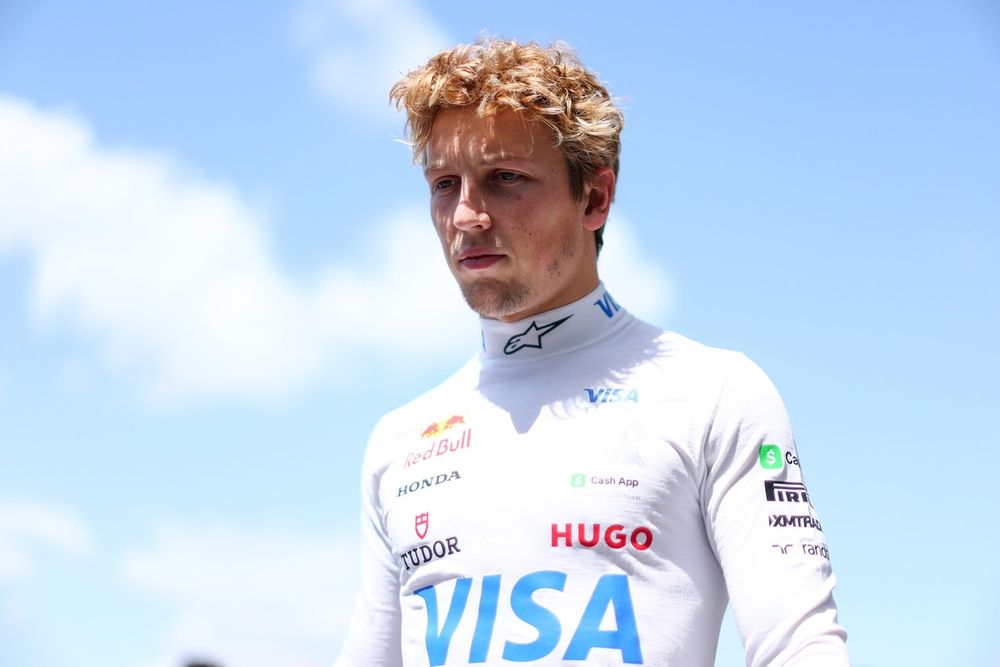
Liam Lawson’s Race Reflections: The Mental Challenge of New Regulations in Formula 1
In the high-octane world of Formula 1, the psychological endurance of drivers is just as critical as their physical capabilities and technical skills. After the recent 2026 Japanese Grand Prix held at the iconic Suzuka Circuit, Liam Lawson, driving for Racing Bulls, laid bare the mental pressures that accompany the new regulations in motorsport. His candid remarks not only shed light on his performance but also highlight the evolving challenges facing all drivers amid significant rule changes.
The Weight of Competition
Liam Lawson finished in a commendable ninth position at Suzuka, but his mental state post-race spoke volumes about the intensity of modern-day racing. “Good, a little bit mentally drained,” he commented in an interview with F1 TV, summing up the emotional and cognitive toll of the race. “It’s very intense this year. You have a lot more that you’re thinking about when you’re driving.” This admission underscores a growing trend in Formula 1: as cars become more complex, the drivers’ mental fortitude and adaptability have never been more tested.
A Shift in Dynamics: New Regulations
The 2026 season has ushered in dramatic changes to car regulations, affecting everything from the power units to vehicle aerodynamics. With an almost 50:50 split between traditional internal combustion engines and electric power sources, Lawson and his fellow competitors are required to adapt to a new set of dynamics while racing at incredibly high speeds. Changes also include active aerodynamics and the introduction of a boost button, which grants drivers temporary speed advantages but requires them to strategically manage their usage throughout the race.
Lawson elaborated on the challenges of adapting to these new regulations: “Well, you’re learning a lot through the race. And to be honest, at the start, like Gabi [Gabriel Bortoleto] passed me and I didn’t even see it coming, before Turn 13, and I was like, ‘Brilliant, I’ve lost a place.'” Such experiences illustrate the steep learning curve associated with the new setups, requiring instantaneous analytical skills and reaction times. Unlike previous seasons, the fluctuating power levels mean that drivers must be constantly aware of their own capabilities as well as those of their competitors.
Navigating Through Uncertainty
Racing is an unpredictable sport, and the introduction of these new variables has made it even more so. Lawson recounted a specific incident where he was able to retake a position from Bortoleto: “But then he had no battery going into 16, so I just passed him back without even doing it on purpose.” This showcases the tactical nature of current races, where drivers must keenly observe their opponents’ strategies while managing their resources meticulously.
The race at Suzuka highlighted how each driver navigates a delicate balance between aggression and caution, with Lawson stating: “We’re sort of all figuring out through the race, OK, if we use our deployment here, we don’t have it the next straight.” This continuous recalibration adds an extra layer of complexity to an already sophisticated sport, illustrating just how integral mental resilience is to success on the track.
The Importance of Strategy
Integral to Lawson’s reflections is the high-stakes nature of race strategy in the current Formula 1 landscape. As drivers observe shifts in pace and power among their rivals, they must also anticipate potential overtakes. “I was watching the guys in front. One would overtake before the last chicane, then get overtaken before Turn 1,” he revealed. Understanding these strategic elements is essential in a sport where the margins for victory are razor-thin.
In situations where drivers are closely matched in skill and machinery, it often comes down to the tactical use of available resources. Lawson himself had to maintain a sustainable mode of racing: “I had Esteban [Ocon] behind me, and I think he realized this as well, and we just both stayed quite sustainable in similar modes, and I was able to keep him behind.” This highlights the mental strategy at play, as keeping an opponent at bay requires just as much focus as trying to overtake them.
A Breather Before the Next Challenge
With the conclusion of the Japanese Grand Prix, the paddock now welcomes a five-week break before heading to Miami. The gap in races provides drivers like Lawson a much-needed respite to recharge both mentally and physically. However, the complexity of the current car setups means that off-track time must also be effectively utilized to analyze data and refine race strategies for the upcoming challenges in Miami.
As motor racing evolves, so too does the role of the driver. In a sport where endurance meets intelligence, Liam Lawson’s insights reveal the profound mental fortitude required to compete at the highest level. As the 2026 season unfolds, it is clear that drivers will continue to face unprecedented challenges, testing the limits of both their physical capabilities and mental resolve.
In the demanding world of Formula 1, mental resilience has become an essential attribute for success, making it equally critical to focus on psychological preparation as much as physical training. The journey has just begun for Lawson and his peers, and as fans, we can only anticipate more engaging races filled with drama, excitement, and mental theatrics that define Formula 1.