Revamping the Ayrton Senna International Circuit: Ensuring Safety and Quality in Brazilian Motorsports
The exhilarating world of MotoGP made a thrilling return to Brazil at the Ayrton Senna International Circuit in Goiania this past March, marking an event that reignited the passion for motorsports in a nation renowned for its love of racing. However, what was intended to be a grand comeback quickly devolved into chaos, as the event was marred by significant issues related to the circuit’s surface. In a decisive move, the Sports and Leisure Secretariat of the Government of Goias has taken action to rectify these problems, announcing the commencement of essential asphalt renovations that will keep the track closed for approximately 35 days.
A Historic Return with Major Setbacks
After a lengthy hiatus of over two decades, MotoGP’s return to Brazil was a historic moment. The circuit in Goiania had not hosted this celebrated racing series in nearly 40 years. Enthusiastic fans filled the grandstands, eagerly anticipating the high-speed action. However, just days before the event, Goiania experienced unprecedented heavy rainfall, leading to unforeseen complications with the track’s asphalt.
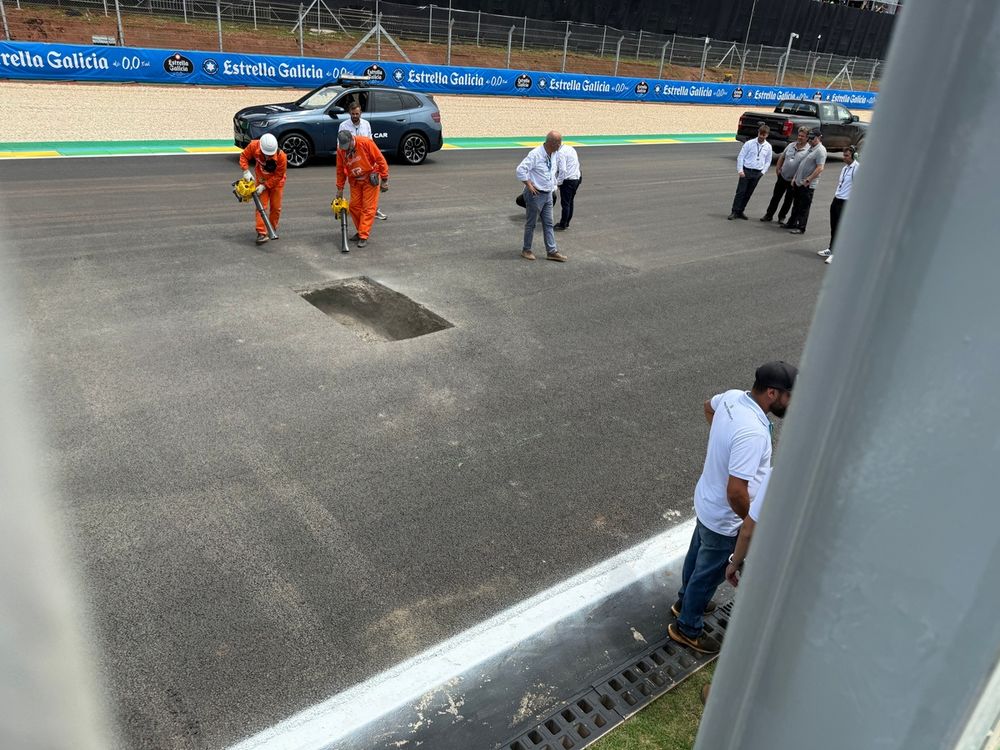
The troubles began on Saturday, as race officials discovered a large hole on the main straight. Fortunately, the damage was located outside of the racing line and could be patched in time for a delayed sprint race, which began approximately 90 minutes late. However, the relief was short-lived. On Sunday, riders faced more severe issues as complaints arose about the track’s undulations, especially at Turn 4. As the race progressed, asphalt at Turns 10 and 11 began to crumble, resulting in loose stones flying onto the track, creating a hazardous environment for the competitors.
Government Response and Planned Renovations
In response to the chaos and growing criticism from racers and fans alike, the Goias government, in collaboration with race organizers and the International Motorcycling Federation (FIM), confirmed the necessity for immediate action. Renovation work on the track has been scheduled to begin this week, specifically on April 6th, with an expected completion time of around three days. However, this work comes with a critical stipulation: a curing period of 30 days post-asphalt application before the track can safely reopen, ensuring that these problems do not resurface in future events.
A statement issued by the Goias Sports and Leisure Secretariat emphasized the importance of these repairs, citing specific areas of concern that emerged after the MotoGP Grand Prix earlier in the month. The thorough approach to the renovations is intended not just to address immediate concerns but to enhance the overall safety and quality of the racing environment for both riders and fans alike.
Impact on the Brazilian Motorsport Calendar
While the renovations are a necessary step toward securing a safer racing experience, the implications of the track’s closure have already begun to ripple through the Brazilian motorsport calendar. The Porsche Cup has been one of the first series to announce a postponement of its race, originally scheduled for the end of April, due to the ongoing renovation work. This postponement raises questions about the timing and scheduling of future events, including high-profile races such as the Stock Car and Moto1000GP, which are set to take place in mid-May. The Moto1000GP organizers have indicated that they are awaiting further communication from the government regarding potential delays but have not as of yet rescheduled their event.
The Importance of Circuit Maintenance and Quality
The incidents that unfolded during MotoGP’s return underscore a critical aspect of motorsport—circuit maintenance. A racetrack is more than just a stage for thrilling competition; it is a carefully engineered environment that must be meticulously maintained to ensure the safety of everyone involved. Poor track conditions can lead to not only disappointing performances but also serious accidents that could endanger the lives of race participants.
Moving forward, it is imperative that the Goias government implements a robust maintenance plan to prevent any reoccurrence of such issues. Regular inspections and timely repairs will be crucial in maintaining the integrity of the Ayrton Senna International Circuit as it continues to host high-stakes racing events for enthusiastic crowds.
Conclusion
As the Ayrton Senna International Circuit prepares for renovations, the Brazilian motorsport community looks ahead with cautious optimism. The challenges faced during MotoGP’s return serve as a wake-up call, highlighting the need for diligence in track maintenance and the fundamental importance of safety. With the Government of Goias taking decisive action, there is hope that the circuit will emerge from this period of renovation stronger and more prepared to host thrilling racing competitions in the future. Fans, riders, and organizers all await the reopening of the track with eagerness, ready to once again embrace the roar of engines and the spirit of competition that defines motorsport in Brazil.
In the world of racing, every curve and straight is a testament to the thrilling unpredictability of the sport; ensuring that the foundations upon which these races take place are solid is non-negotiable, for the safety and enjoyment of all involved. With the right measures in place, the Ayrton Senna International Circuit is poised to reclaim its place as a jewel in the crown of Brazilian motorsports.