Pits, Positions, and Promises: Ryan Blaney’s Journey through the NASCAR Cup Series
The NASCAR Cup Series is a relentless battlefield where speed, strategy, and precision are critical to success. At the heart of this competition lies the ever-important pit stops, pivotal moments that can transform the trajectory of a race. Recently, Ryan Blaney has found himself in a precarious predicament during these crucial periods, as he struggles to maintain track position on nearly every pit stop. This issue has raised questions about the efficiency and coordination of his pit crew, as well as its impact on his performance this season.
In the most recent race at Bristol Motor Speedway, the stakes were particularly high. Leading late in the race, Blaney faced a dilemma typical of racing’s inherent unpredictability. A late caution forced his crew chief, Jonathan Hassler, into a challenging decision: pit from the lead and risk losing the position to Ty Gibbs, who was poised to stay out, or remain on the track and potentially allow Gibbs to seize the advantage on pit road. Ultimately, Hassler chose to pit, a move that would prove consequential as Gibbs fended off Blaney and Kyle Larson to secure his first career victory in the NASCAR Cup Series.
Before this race, Blaney had already faced a significant challenge, having lost a staggering 86 positions on pit road across multiple events this season. The question lingers: what is leading to these repeated setbacks? Despite boasting one of the fastest cars on the track and repeatedly fighting his way back up after pit stops, it seems the combined efforts of Blaney and his pit crew aren’t translating into the results they’re all striving for.
Following the race, Hassler expressed faith in his team’s potential and capability. “I think they did a great job,” he told NASCAR.com. “We had a couple mistakes again, but they stuck with it. All of those guys are capable, and we’ve stuck with them. When everything was on the line, they followed through. The guys have a lot of potential, but we’ve had some bumps in the road.” His remarks reflect a commitment to his team, hoping to forge a path toward improved performance amidst the ongoing challenges.
Conversely, Ryan Flores, a former tire changer for Blaney, voiced concerns on his podcast, Stacking Pennies, noting that the current pit crew’s confidence has likely taken a significant hit throughout the winter and spring races. Flores stated, “Now look, they have zero confidence. They’re gonna have zero confidence.” He further elaborated on the crew’s challenges, emphasizing the difference between being in the race and effectively competing for wins.
Flores acknowledged that while all crew members did their best to keep Blaney in the race, merely maintaining a position in the top 10 week after week is not a sustainable strategy, especially when the ultimate goal is winning races. “When you’re pitting from the lead, and you’re going out sixth, there’s got to be something that changes,” he remarked. The underlying issue seems to be a lack of synchronization between the team and the car, which has not yet reached an optimal performance level.
In sports like NASCAR, the bond between a driver and his pit crew cannot be overstated. A well-functioning pit crew acts like a synchronized engine, each component working together harmoniously to ensure the driver has the best chance of performing. Conversely, when things go awry, the aftermath can have dire consequences. The pressures of competition amplify the stakes made evident through Blaney’s experience; winning requires cohesiveness both on and off the track.
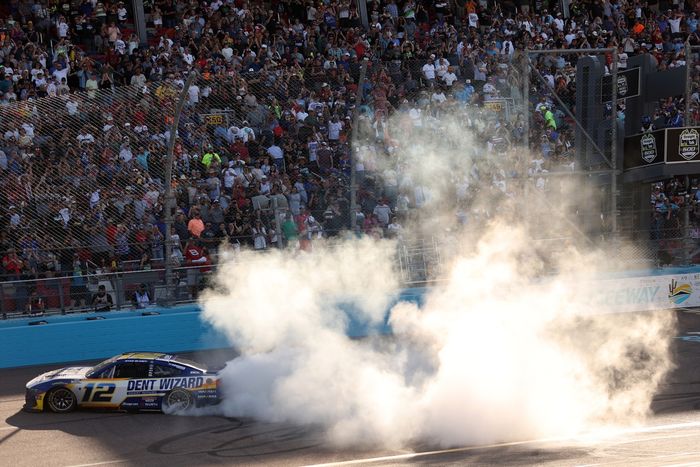
Despite the current challenges, Blaney’s performance on the track showcases his resilience and skill as a driver. He consistently manages to claw his way back to contention even after losing substantial ground during pit stops. His No. 12 car is consistently among the fastest in the field, hinting at promising potential as both driver and machine. However, without the right support from his pit crew, Blaney finds himself stuck in a cycle of missed opportunities.
The ongoing dialogue within the NASCAR community around Blaney’s situation illuminates broader themes within competitive racing: teamwork, the pressures of performance, and the need for adaptability. Blaney and his team are facing a critical juncture; the ability to adapt to their challenges and come together as a cohesive unit will determine not only their immediate success but also the trajectory of their season.
As the NASCAR Cup Series unfolds, every pit stop will continue to serve as a moment of truth for Blaney’s crew. Will they rise to the occasion and elevate their performance, or will persistent struggles on pit road define their season? The coming races will serve as an intense test of endurance, teamwork, and expertise, ultimately shaping the narrative of Blaney’s campaign.
In conclusion, the road to NASCAR victory is often fraught with unexpected challenges, and Ryan Blaney’s recent experiences at Bristol serve as a stark reminder of this truth. With the complexities of race strategy and the imperative of teamwork at play, the pursuit of excellence in motorsports remains a daunting yet exhilarating journey, promising fans and participants alike a thrilling narrative as they witness the highs and lows of competition on the asphalt battleground. As the season progresses, Blaney and his crew will need to summon their resolve, learn from their setbacks, and ultimately aspire to not just compete, but to conquer.