Ford’s Bold Entry into LMDh Racing: A Race Against Time
Aiming for High Performance
In an ambitious bid to re-establish its presence in endurance racing, Ford is on track to test its first Le Mans Daytona hybrid (LMDh) car in the third quarter of this year. This move is considered significant as the American automaker prepares for its entry into the World Endurance Championship’s Hypercar class, which is slated to kick off in 2027.
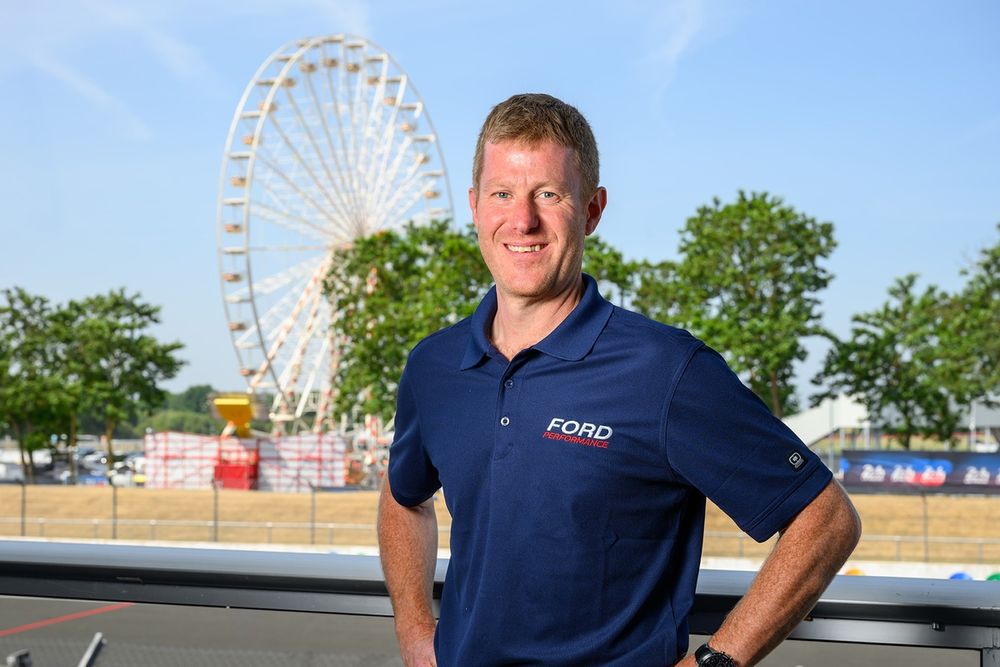
Dan Sayers, the chief of Ford LMDh, shared insights about the development timeline in a recent media call. The team working on the prototype is distributed across various locations in the UK, the US, and France, contributing to the project in parallel. The new race car, which is still nameless, is built upon an Oreca LMP2 chassis and will feature a 5.4-liter naturally-aspirated V8 engine—an impressive specification that emphasizes Ford’s commitment to combining innovation with tradition.
Progress and Challenges
Sayers expressed satisfaction with the development pace, stating, “We are exactly where I expected to be. There are always going to be problems, but it has gone quite well so far.” With the production of the test car’s engine expected to start soon, the homologation process is also underway and remains on schedule.
According to Sayers, they anticipate rolling out the first test car in the south of France. The initial phase will encompass a week dedicated to rolling out and debugging the vehicle, followed promptly by the first track testing session at the beginning of Q3.
Comprehensive Testing Strategy
Sayers further elaborated on the meticulous planning that has gone into Ford’s test program. “The whole of the test plan is booked and confirmed, so we’re pushing like hell to make sure we are ready,” he shared. He also pointed out that missing a scheduled test could have cascading repercussions on the entire project, underlining the importance of staying on course.
The testing regimen includes initial runs in Europe before transitioning to American tracks for strenuous trials. Such a strategy showcases Ford’s commitment to not just meeting deadlines but ensuring robust vehicle performance.
Introducing a Twin Car Strategy
Reflecting on industry practices, Sayers announced plans to develop a second test car, mirroring strategies adopted by other competitors in the Hypercar segment. This dual-vehicle approach will enable the team to conduct parallel testing and development, significantly improving efficiency.
Initially, Ford will focus on accomplishing a rigorous 30-hour test in Europe. Following this, the team will head to the United States for additional testing, particularly at famous endurance tracks such as Sebring, known for its demanding conditions. Sayers highlighted the intricate balance between maximizing mileage and ensuring adequate time for development analysis and updates.
Fast-Tracking Development
Sayers is keenly aware of the constraints of time in high-stakes racing. “We’re trying to stage the tests with a good couple of weeks in between to allow us to do development analysis and code updates,” he explained, emphasizing the critical nature of timing in endurance racing preparations.
With only a limited time frame between tests, the program is designed to capitalize on every opportunity for improvement while also ensuring that the car’s performance meets the rigorous standards expected by fans and engineers alike. The first race is fast approaching, with Ford setting its sights on participating in the upcoming event in Qatar.
A Legacy Reimagined
Ford’s LMDh project is steeped in a rich history of motorsport, where the brand has previously not only participated but also triumphed in various endurance competitions. The impending return to endurance racing serves not only as a marketing tool but also as a testament to Ford’s ongoing commitment to automotive engineering excellence.
This project also represents a convergence of Ford’s legacy of performance and innovation. As the company strides towards 2027 and beyond, it is not just about winning races; it is equally an endeavor to inspire a new generation of automotive enthusiasts.
Conclusion
As Ford navigates the complexities of developing its LMDh car, the road ahead is both challenging and exhilarating. With a streamlined development schedule, cutting-edge technology, and a talented team working behind the scenes, Ford is on a determined path to reclaim its status in the world of endurance racing.
The launch of the new LMDh prototype is more than just a project; it signifies Ford’s passionate return to a sport where it once set benchmarks and achieved legendary status. As fans and stakeholders anticipate the unveiling of this new racing machine, one thing remains clear: Ford is poised to make a significant impact on the world of motorsport once again.
With adrenaline-pumping action on the horizon and innovations set to captivate the industry, Ford’s foray into LMDh promises to be a thrilling chapter in its storied history of automotive excellence.