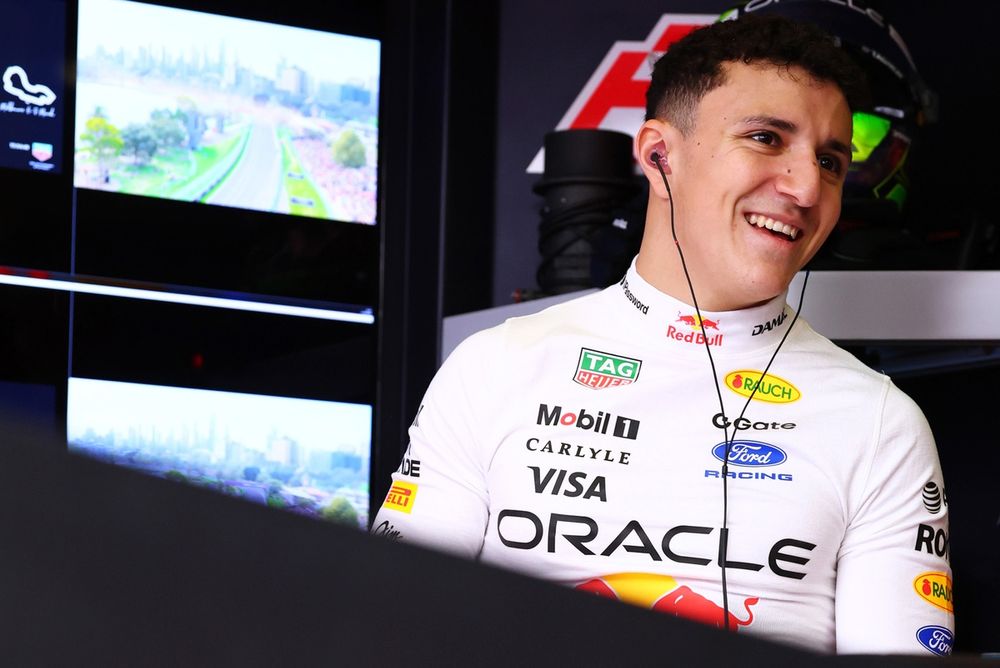
Red Bull Racing’s Struggles at the Japanese Grand Prix: An In-Depth Analysis
In recent weeks, the aura of dominance that Red Bull Racing has cultivated in Formula 1 has faced challenges that many have found surprising. As they approached the Japanese Grand Prix at Suzuka, the team’s struggles became apparent, leaving fans and analysts puzzled and concerned.
The Current Situation: A Candidate for ‘Midfield’ Status
This year, Red Bull Racing’s performances have not only differed from their recent successes but have also placed them in the unfamiliar territory of the midfield. With Isack Hadjar and Max Verstappen at the helm, their eighth and eleventh-place qualifying positions at Suzuka, respectively, starkly contrasted with the team dynamics of previous seasons. Hadjar, a promising talent with a contract for 2026, was left 1.2 seconds adrift of polesitter Kimi Antonelli. Verstappen, a four-time world champion, expressed his dismay over the RB22’s performance, stating, “there is something wrong with the car”.
A Troubling Trend: Lack of Points and Performance Anomalies
The ongoing issues were not isolated to Japan; the previous event in China similarly showcased a disturbing trend. It resulted in Red Bull failing to score any points during the sprint race and just four in the main grand prix. While Hadjar managed an eighth-place finish, Verstappen’s technical retirement did not help the team’s situation. Initially, it was thought that the Shanghai results were an anomaly. However, as they arrived in Japan, it became increasingly clear that the optimism fostered in the Australian race fell flat—revealing a concerning continuity of issues.
When questioned about the team’s understanding of the root of their struggles, Hadjar candidly admitted, “No, not right now. What we are seeing this weekend makes no sense.”
Historical Context: Return to Unpredictability
Red Bull’s challenges in Japan evoke memories of the early stages of the previous season, particularly with the RB21, which was notorious for its unpredictable handling. Only mid-season upgrades allowed Verstappen to become competitive in the title chase. The team’s expectation for the RB22—a more driver-friendly car—has not translated into the results they hoped for. Instead of aggressively racing against traditional adversaries like Mercedes and Ferrari, the team finds itself eclipsed by upstarts like Alpine, Audi, and even their sister team, Racing Bulls.
Hadjar’s analysis of the RB22’s performance was particularly telling. “It was very hard to drive,” he remarked. “Last year’s car was fast but difficult to handle. This year’s car is both hard to drive and slow, indicating a pressing need for improved efficiency.” The ongoing unpredictability leaves drivers guessing lap by lap, creating a turbulent atmosphere that hampers developmental progress within the team.
Technical Challenges: The Balance Dilemma
A critical aspect of Red Bull’s current troubles lies in their car’s balance. With Suzuka’s high-speed nature, the car’s balance plays a crucial role, especially through the challenging Esses in sector one. Unfortunately, the RB22’s handling has exhibited significant variability, causing Hadjar to describe a drastic shift in its performance from practice sessions to qualifying. “It changed massively compared to FP3,” he noted. “On my first lap, I thought I was going to crash straight away. It was sliding all over the place.”
Such unpredictable handling requires drivers to continuously adapt, often leading to suboptimal strategies during crucial moments, including qualifying sessions. Hadjar’s experience typified this; he struggled with the car’s lack of load and responsiveness, noting, “It goes in one direction or the other very quickly. FP3 was the opposite balance, which adds to the inconsistency.”
Future Prospects: Strategic Reassessment Required
The path ahead for Red Bull Racing requires an intricate analysis of their current challenges. The team has prided itself on its engineering prowess and adaptability. However, the chronic instability of their new car indicates that immediate technical reassessment and development may be necessary. As they race towards the end of the season, strategic decisions will be paramount in ensuring that they can regain their former competitive edge.
While the forecast for Red Bull Racing looks cloudy, the team has historically thrived under pressure. The forthcoming races will undoubtedly require their most seasoned and strategic approaches to development and teamwork. The crucial question remains: can Red Bull Racing rediscover their competitive spirit and rise from the midst of adversity? As the drivers and engineers grapple with the car’s limitations, fans will be watching closely, hoping for a return to form.
Conclusion
The situation at Red Bull Racing during the Japansese Grand Prix is a compelling narrative of resilience against unexpected challenges. While setbacks can often provide valuable learning experiences, the team must act decisively to navigate their way back into a more familiar podium-finishing position. As F1 fans and analysts watch intently, it’s clear that the journey ahead will be filled with both hurdles and opportunities.