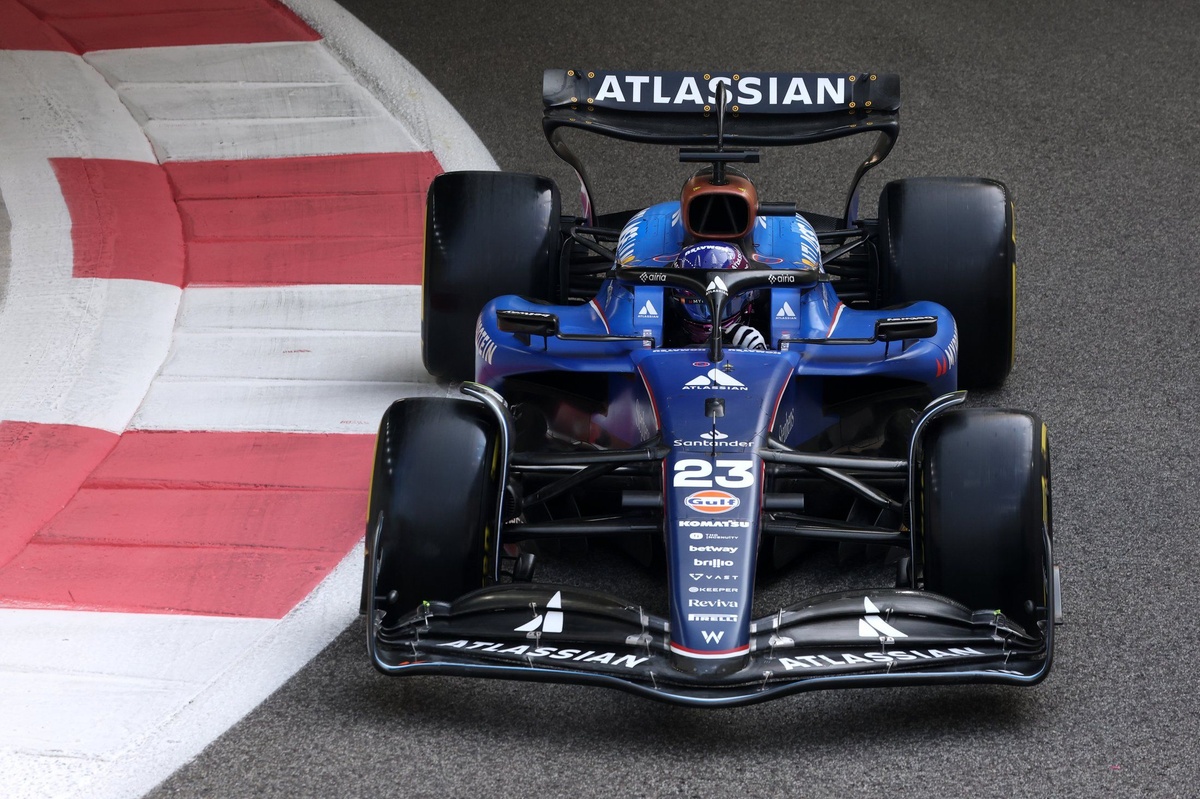
Williams F1 Team Turns Strategic Pit Stops into a Learning Opportunity at Suzuka
In the ever-competitive landscape of Formula 1, teams must continuously innovate and adapt to stay relevant. This was recently exemplified during the Japanese Grand Prix, where James Vowles, team principal of Williams Racing, disclosed a strategic decision that may have raised eyebrows among fans: Alex Albon’s seemingly excessive late pit stops were not just random incidents, but rather a calculated move aiming to gather critical data for the team.
As the 2026 season kicked off, Williams found itself grappling with challenges, including missing out on private testing opportunities in Barcelona and arriving at the Australian Grand Prix with a car that was, unfortunately, overweight. These factors left the team in a difficult position, making a points finish unlikely. Instead of simply riding out the race, Williams opted for an alternative approach to maximize its learning experience.
A Decisive Strategy for Data Collection
During the closing laps of the race at the Suzuka Circuit, it became clear that Williams was not in contention for points. Vowles explained that rather than just letting the clock run down, the team made a conscious decision to utilize their remaining time to experiment, specifically with the front wing angles on Albon’s car. “What were we doing with Alex in those last few laps of the race where he was coming in and out for pit stops?” Vowles pondered during The Vowles Verdict, an interactive session with fans. “We knew we weren’t in a point-scoring position, but equally, we want to make sure we maximize our learning in all of these races whilst that is the case.”
This approach is not unheard of in the world of motorsport, where the need for data can often outweigh the immediate goal of securing points. In Formula 1, understanding vehicle dynamics is crucial. To align real-world performance with simulations and wind tunnel data, teams regularly employ various methodologies.
Innovations and Testing Protocols
Vowles elaborated on the practicalities of their late-race strategy, noting that teams often employ tools like flow visualization—where colored paints are applied to surfaces to study airflow—and rakes, which are used during free practice to gather aerodynamic data. However, such methods are impractical during the race itself. Instead, Williams decided to get creative within the constraints of the racing environment.
“With the late pit stops, we were effectively going up and down on front wing angle to ensure that the correlation between our on-track performance and what we expected from our wind tunnel and Computational Fluid Dynamics (CFD) simulations was accurate,” Vowles revealed. He described how they aimed to ascertain that their aerodynamic map for downforce matched their expectations across multiple configurations.
The decision to experiment with front wing angles served a dual purpose. First, it enabled the team to collect invaluable data that would inform future developments. Second, it provided Albon with the opportunity to assess how these changes impacted the car’s handling and overall performance on a track known for its unique challenges. This data will undoubtedly play a role in shaping future adjustments and the team’s long-term strategy.
Navigating Challenges in the 2026 Season
The challenges Williams faces in the current season are indicative of broader trends in Formula 1, where the margin between success and failure can often hinge on tiny details. As the team navigates through early-season difficulties, Vowles’s proactive approach aligns with the philosophy of continuous improvement and relentless innovation that is necessary to thrive in the sport.
Efficiency, learning from mistakes, and strategic planning are critical components of any successful F1 team. The choice to prioritize data collection during a race that was not poised to yield points signifies a culture of learning at Williams, one that encourages experimentation even under less-than-ideal circumstances.
Moreover, the repercussions of implementing such a strategy can extend beyond immediate gains. By understanding the car’s performance in various configurations, Williams can make informed decisions that drive development in subsequent races, ultimately contributing to a stronger overall performance as the season progresses.
Looking Ahead: The Path to Improvement
As the season unfolds, Williams will undoubtedly continue to draw on the insights gained from Suzuka. The experience is a testament to the resilience and forward-thinking mentality of the team, reflecting a commitment to not just survival but growth amidst adversity.
In conclusion, while Formula 1 is often viewed through the lens of immediate results, the strategic decisions made by teams like Williams during races can shape their future trajectories. By transforming potential disadvantages into learning opportunities, the Williams team exemplifies how adaptability, data-driven decision-making, and innovation remain the bedrock of success in the fast-paced world of motorsport. The journey is far from over, and as Vowles and his team set their sights on the challenges that lie ahead, they are undeniably laying the groundwork for a reinvigorated future on the Formula 1 grid.