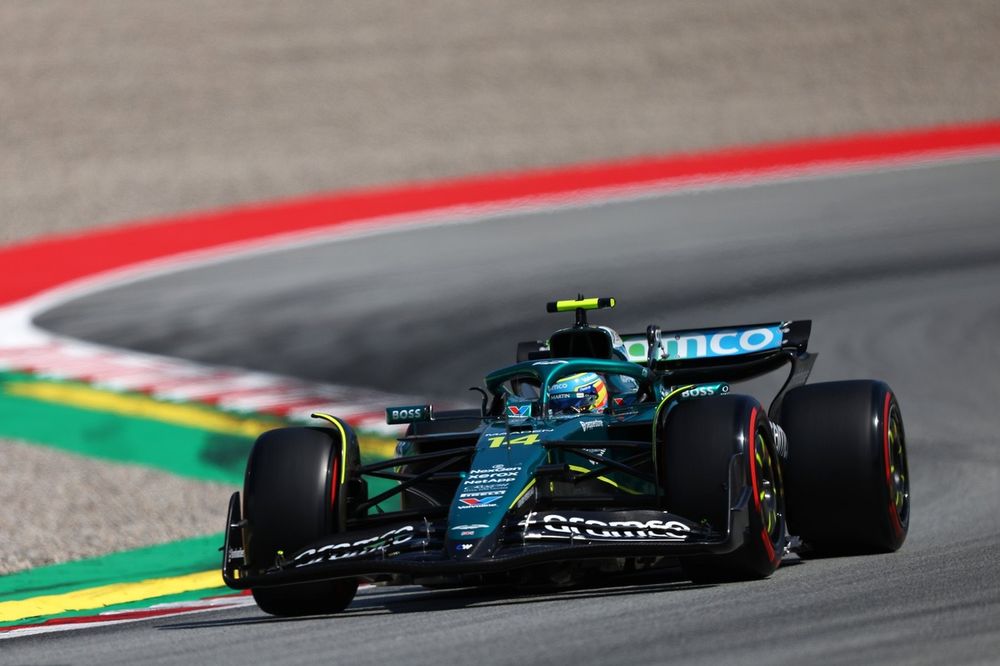
Aston Martin’s Challenges in the 2026 Formula 1 Season: Insights and Strategies for Improvement
As the 2026 Formula 1 season unfolds, the motorsport world has its eyes firmly fixed on Aston Martin, a team that has experienced a tumultuous start amidst a backdrop of high expectations and ambitious goals. Under the leadership of Lawrence Stroll, Aston Martin entered this season with a renewed sense of hope, fueled by a significant partnership with Honda for power units and the technical acumen of renowned engineer Adrian Newey. Regrettably, things haven’t gone as planned.
The Stumbling Blocks of Pre-season Testing
Typically, pre-season testing serves as a crucial barometer for teams to gauge their performance before the competitive season kicks off. However, Aston Martin’s experience was anything but smooth. The team managed to complete only a minimal number of laps, raising alarm bells concerning the reliability and performance of their vehicles. With the introduction of new regulations, the stakes couldn’t be higher, and the challenges faced during testing led to an underwhelming performance in the initial races.
In Chandhok’s view, the issues plaguing Aston Martin are multi-faceted and require a focused, constructive approach rather than one marked by blame-shifting. “They’ve got to try to avoid the finger-pointing,” he emphasized, recognizing the difficult position in which the team now finds itself.
The Frustrations of Expectation
With substantial investments poured into developing a state-of-the-art facility, including a new wind tunnel and advancements in gearbox technology, Aston Martin’s ambitions were clear. They aimed to transition from being a midfield team to one that consistently finishes in the top five. This transformation was expected to align with the new regulations that were formulated to level the playing field in Formula 1.
Chandhok expressed sympathy for Lawrence Stroll, pointing out that a significant financial commitment has been made in pursuit of success. “It’s a sense of frustration, but now they’re in it, they’ve just got to try and make it work,” he commented. This blend of emotional investment and the harsh realities of competition is a robust reminder that even with the right infrastructure, the journey to success is fraught with difficulties.
Technical Challenges and Long-term Solutions
On the technical front, former Aston Martin strategist Bernie Collins provided an outlook that may dampen the spirits of fans. She noted that rectifying issues stemming from the power unit and gearbox may take longer than expected. “I think anything engine, gearbox-related is a long lead time item,” Collins said. Such complications pose a significant hurdle. Each race weekend becomes a testing ground where the team attempts various tweaks to alleviate the primary issues that stem from vibrations, which appear to be a central concern linked to the power unit.
Collins elaborated that if the core problems lie within the fundamental design of the engine, rapid adjustments may prove impossible. Teams are typically allowed some leeway in terms of development time, but the complexity of changes needed means a quick turnaround simply isn’t feasible. “They could be in for a pretty rough year for the entire season,” she cautioned, providing a sobering perspective on the challenges that lie ahead.
The Path Forward: Collaborative Strategies
For Aston Martin to emerge from this challenging phase, a shift in strategy is paramount. Chandhok’s suggestion to foster collaboration within the team is a critical first step. Embracing a culture where all departments work in synergy can often lead to innovative solutions and improvements. This collaborative mindset should extend beyond just the technical team; drivers must also be engaged in sharing feedback from their racing experiences, which can provide valuable insights into the car’s performance.
Additionally, building a resilient team culture can assist in maintaining morale, particularly in testing times. Leadership needs to emphasize unity and a forward-thinking attitude, focusing on solutions rather than problems. Having a clear and shared vision can motivate every member of the team to contribute toward overcoming the obstacles they face.
Cultivating Patience and Long-Term Vision
Formula 1 is ultimately a sport that rewards patience and long-term strategy. The most successful teams are those that do not only seek immediate success but also develop a vision grounded in sustainable growth and continuous improvement. Aston Martin has laid a robust foundation for its future but will need to weather the storm of the current season to realize its potential fully.
As they navigate this difficult landscape, it’s essential for stakeholders to remember that the road to recovery can be gradual. Success does not happen overnight; it requires rigorous testing, adaptation, and the willingness to learn from setbacks.
Conclusion
The 2026 Formula 1 season brings with it a set of challenges that Aston Martin must overcome to realize its ambitions of breaking into the top ranks of the sport. With former drivers and analysts observing the unfolding drama, the pressure mounts for every decision made at the team’s headquarters. The key takeaway from the insights of experts like Karun Chandhok and Bernie Collins is clear: collaboration, understanding, and a long-term commitment to improvement will be essential if Aston Martin is to reclaim its competitive edge. While the current circumstances may be discouraging, they also present an invaluable opportunity for learning, growth, and eventual success on the Grand Prix circuit.