Oliver Bearman Opens Up About His Japanese Grand Prix Crash: A Call for Respect Among Drivers
In a candid interview with the Up to Speed podcast, Oliver Bearman, the young driver for the Haas F1 Team, shared his harrowing experience following the accident he endured during the recent Formula 1 Japanese Grand Prix. In a remarkable display of accountability and professionalism, Bearman pointed to Franco Colapinto as the individual responsible for the incident, igniting discussions around driver conduct and safety protocols within the sport.
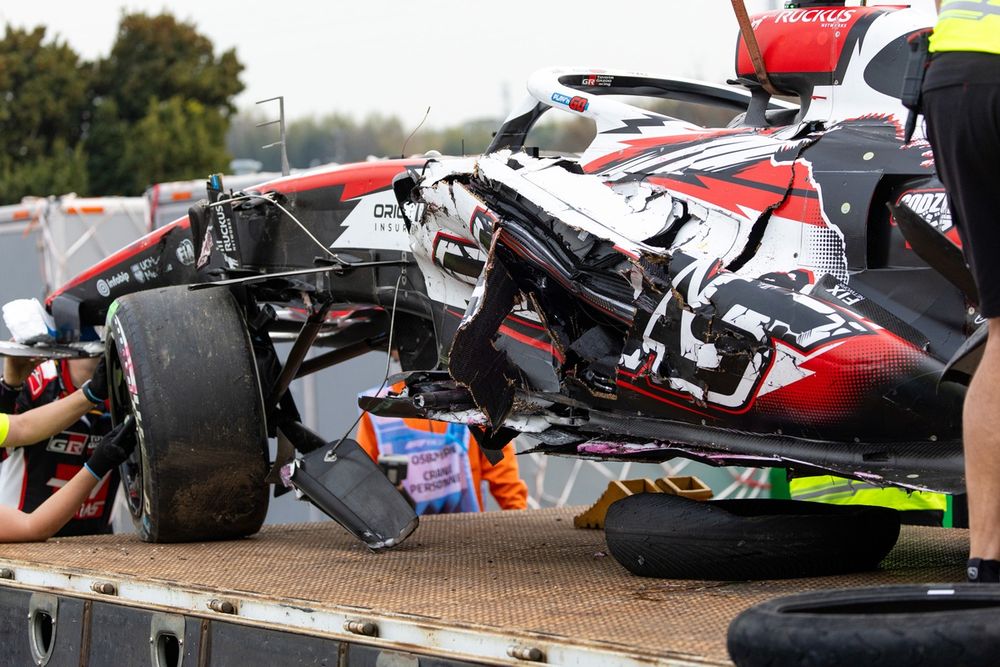
The incident occurred on the 22nd lap of the race held at the renowned Suzuka Circuit, a track famous for its unique layout and challenging corners. Bearman found himself in a precarious situation as he closed the gap on Colapinto, who was engaged in energy harvesting, resulting in a staggering speed differential of nearly 50 km/h. Understanding the danger inherent in such a scenario, Bearman attempted to steer left onto the grass to avoid a collision. Unfortunately, this maneuver led him to lose control of his car and crash into the barriers with a force equivalent to 50G. Miraculously, Bearman emerged from the incident unscathed, although he did require assistance to exit his Haas car.
An important aspect of racing is the pressure to perform, particularly in Formula 1, where every millisecond counts. Bearman, a mere 20 years of age, has already demonstrated remarkable talent and potential in his career. His decision not to speak with the media immediately following the crash underscores the emotional turmoil racing drivers experience after such incidents. However, his reflection days later provides crucial insights into the mind of a driver navigating the treacherous waters of competitive racing.
Bearman articulated his concerns during the podcast, emphasizing how unusual it is for two drivers battling for position to encounter such a dramatic speed gap. “That’s the first time really in history, or at least as long as I can remember, that two cars fighting for position have such a massive speed delta,” he commented, highlighting the need for regulatory reassessments to mitigate such occurrences in the future. He argued that Colapinto’s defensive maneuver was inappropriate given the significant speed difference.
Colapinto, whom Bearman identified as the cause of the crash, had moved left in an attempt to defend his position but failed to account for the rapid approach of Bearman. “Franco moved in front of me to defend his position. Last year, it would have been absolutely on the limit, but probably acceptable with just a five or 10 km/h speed delta,” Bearman explained. He noted that in their discussions during drivers’ briefings, the need for mutual respect and awareness of speed differentials was emphasized. Bearman found it particularly frustrating that despite these conversations, the incident still occurred.
The role of regulations in Formula 1 cannot be overstated. As racing technology evolves, so too must the rules governing driver behavior and safety. Bearman’s call for drivers to be more considerate of one another is echoed by many in the paddock. Reflecting on his experience, he stated, “We need to sort these things out between drivers, have a bit more respect between us.”
Despite the turmoil of the incident, Bearman’s attitude remains positive and forward-thinking. He expressed gratitude for escaping the crash without injuries and voiced anticipation for the upcoming race in Miami, scheduled for May 1-3, 2026. The contrast of the high-stakes environment of Formula 1 with the camaraderie and mutual respect needed among drivers serves as a poignant reminder of the sport’s essence. Bearman’s situation illustrates the precarious balance drivers must maintain as they navigate the intense competition while prioritizing their safety and the safety of their fellow competitors.
The dialogue spurred by Bearman’s experience transcends mere incident analysis; it highlights a crucial conversation regarding the future of racing safety. The FIA, the sport’s governing body, has a vital role in examining current regulations surrounding high-speed differentials and driver movements in racing scenarios. As drivers push the limits of technology and speed, an imperative exists to ensure that safety is always the top priority.
Furthermore, the collaborative nature of the Formula 1 community should be leveraged to explore possible alterations to existing regulations, aiming to minimize the risks associated with speed disparities during racing events. As Bearman noted, a speed delta of 50 km/h can turn an otherwise routine racing maneuver into a perilous situation, reinforcing the need for proactive solutions to emerge from discussions among drivers, teams, and governing bodies.
In summary, Oliver Bearman’s recent accident at the Japanese Grand Prix serves not only as a personal experience but also as a catalyst for broader discussions about safety and mutual respect within the sport. His willingness to publicly address these concerns could be a crucial first step towards promoting a culture of safety and accountability in racing. As fans and stakeholders eagerly await the next chapter in the ongoing saga of Formula 1, hopes are high that further advancements in safety measures and regulations will arise, paving the way for a new era of thrilling yet safe racing.