Scott McLaughlin’s Harrowing Crash at Barber Motorsports Park: A Look Back at the Incident and Its Aftermath
In the high-octane world of motorsports, where speed reigns supreme and the margins between victory and disaster can be razor-thin, Scott McLaughlin found himself at the center of a terrifying incident during the second practice session at Barber Motorsports Park. Racing at speeds between 60-70 mph, McLaughlin’s heart-stopping crash has left an indelible mark on both him and the fans who witnessed it.
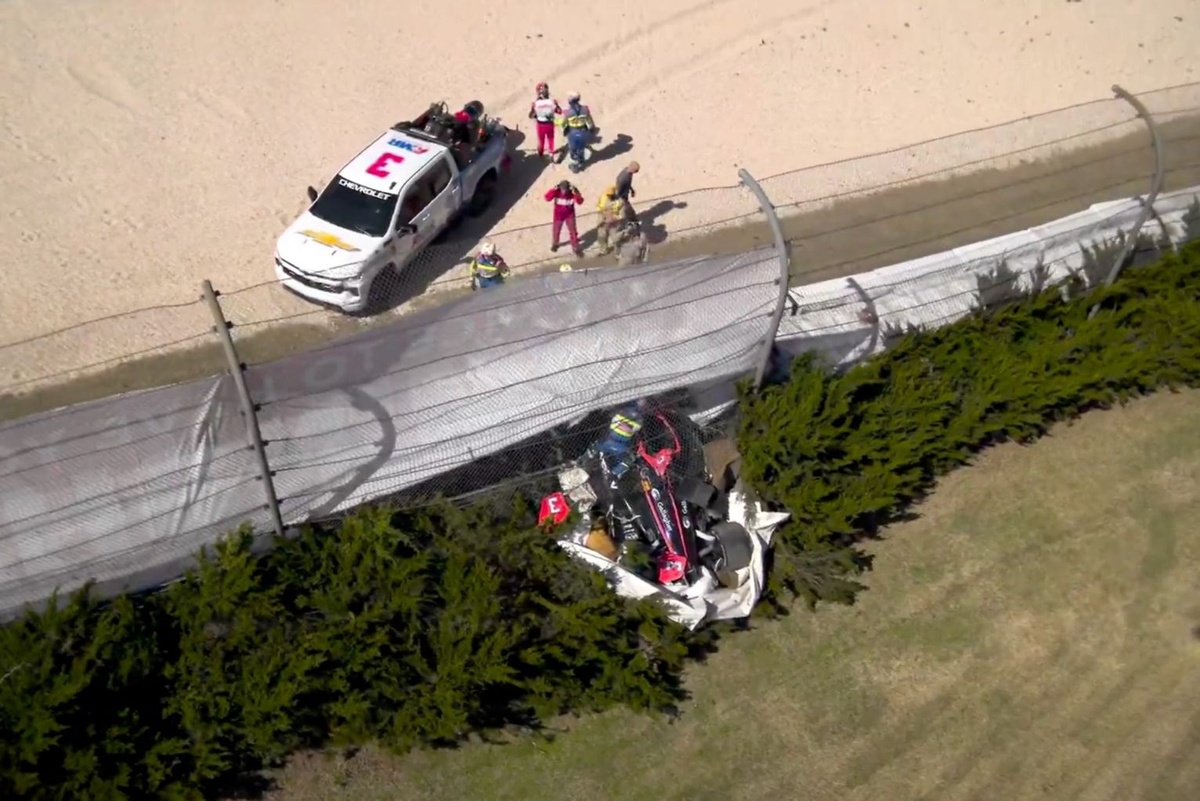
As McLaughlin barreled down the front straightaway, it seemed like just another day at the track for the talented driver representing Team Penske. However, in a split second, everything changed. Approaching Turn 1, McLaughlin’s #3 Chevrolet clipped the grass, an all-too-common mistake that can lead to disastrous consequences. The rear end of the car lost traction, spinning uncontrollably as McLaughlin attempted to regain control. What followed was a catastrophic sequence that sent him skidding backwards through the gravel trap and grass before hitting a bump on the 2.3-mile, 17-turn natural terrain road course. The impact was severe, causing the car to clip the top of a tire barrier before crashing through a fence. Visually striking, half of the car ultimately came to a rest amidst the bushes beyond the protective wall.
The reaction to the crash was immediate. The AMR Safety crew raced to the scene, their rapid response emblematic of the rigorous safety protocols ingrained in modern motorsport. Miraculously, McLaughlin emerged from the wreckage unscathed. In a replay of the incident, viewers could see the driver instinctively gripping the sides of his helmet just moments before the car collided with the fence, a natural reflex of a driver bracing for impact.
Due to the extensive damage caused not only to McLaughlin’s vehicle but also to the fencing, the session was halted, waving both the red flag and a checkered flag on the practice. The team’s backup car was rolled out as preparations for continued practice took place, highlighting the resilience and determination that characterizes Team Penske.
Once McLaughlin was cleared from the infield care center to speak with the media, he reflected on the incident with a mixture of relief and disappointment. “Look, I knew I was done once I dropped the right rear and spun. Sort of just tried to brace myself a little bit…but I think the crash looked a lot worse than it felt,” he remarked. Overwhelmed by appreciation for his team, particularly his sponsor, Odyssey Battery, he expressed a sense of optimism. “Honestly, I feel like we can get this thing fixed, and I can go ship it again. I just want to go out and go for pole,” he added, underscoring both his commitment to his craft and his unyielding spirit.
When discussing the mental recovery after such a spine-chilling experience, McLaughlin demonstrated his focused mindset. “Just get in the car and get going. I can’t wait. The car feels good; a little bit loose this morning, but cold temps were making it a little different. But, yeah, I feel good and love this place. I just want to get back out there and have a chance.” His eagerness to return to the track speaks volumes about his character as a competitor and his unwavering passion for racing.
As the dust settled on the practice session and the recovery efforts continued, the incident served as a stark reminder of the dangers inherent in automotive racing. Despite the advancements in safety equipment and track design, the unpredictability of high-speed racing remains a constant challenge for drivers and teams alike. The ability of drivers to maintain focus after experiencing such incidents is an essential aspect of their profession, and McLaughlin’s attitude reflected an understanding of this reality.
This crash was not just an isolated event, but rather part of the broader narrative shaping the IndyCar season and the challenges faced by all participants. Other drivers, such as Christian Lundgaard, who aims to overcome recent qualifying struggles at Barber, were taking notice of the risks involved. Lundgaard, along with his peers, must navigate the complexities of the track while managing their own performance, further highlighting the competitive nature of this sport.
Furthermore, the presence of comparatively new competitors, like Mick Schumacher, adds a dynamic layer to the current racing scene. Schumacher’s candid reflections on adapting to the IndyCar environment present an opportunity for growth, emphasizing how veterans like McLaughlin can act as benchmarks for younger talents navigating the circuit’s pressures.
As excitement builds toward the upcoming races, McLaughlin’s experience will undoubtedly resonate with fans and drivers alike. It serves as a reminder of the unpredictable nature of motorsports, harnessing a mixture of thrill, danger, and ultimately, resilience. The journey that McLaughlin has embarked upon not only reflects his skill as a driver but also his tenacity in the face of adversity.
Ultimately, as we look forward to the remainder of the season, the story of Scott McLaughlin will remain pivotal, illustrating the delicate balance between speed and safety that defines the thrilling spectacle of IndyCar racing. Whether he achieves his goal for pole position or faces further challenges, one thing is certain: McLaughlin’s spirit will continue to inspire, representing the unyielding pursuit of excellence that characterizes the fierce world of motorsports.