body {
font-family: Arial, sans-serif;
line-height: 1.6;
margin: 20px;
padding: 0;
background-color: #f4f4f4;
}
h1 {
color: #333;
}
h2 {
color: #555;
}
ul {
list-style-type: none;
padding: 0;
}
ul li {
background: #e4e7eb;
margin: 5px 0;
padding: 10px;
border-radius: 5px;
}
p {
margin: 10px 0;
}
Two Wins in a Row: Formula 1’s Youngest Champions
In the high-octane world of Formula 1 racing, achieving victory is no small feat. However, as many seasoned drivers will tell you, the real challenge lies not in claiming the crown, but in defending it. This notion is vividly illustrated by the career trajectory of Kimi Antonelli, a young prodigy who has already carved his name into the annals of F1 history. After becoming the second-youngest driver to win an F1 race at the Chinese Grand Prix, Antonelli stunned the world by securing victory in the Japanese Grand Prix just weeks later. This remarkable feat not only crowned him as a race winner but also made him the youngest championship leader in F1’s storied history.
The Elite Group of Back-to-Back Winners
The excitement surrounding Antonelli’s achievements begs the question: how many other drivers have managed to clinch their first two victories consecutively? Remarkably, only 116 drivers throughout the history of Formula 1 have won at least one race, and of those, just 82 have managed to win twice. Among this elite group, a mere ten drivers have achieved the rare feat of back-to-back wins following their debut victory. Here’s a closer look at these exceptional talents:
- Alberto Ascari: German GP and Italian GP, 1951
- Peter Collins: Belgian GP and French GP, 1956
- Bruce McLaren: United States GP, 1959 and Argentine GP, 1960
- René Arnoux: Brazilian GP and South African GP, 1980
- Nigel Mansell: European GP and South African GP, 1985
- Damon Hill: Hungarian GP and Belgian GP, 1993*
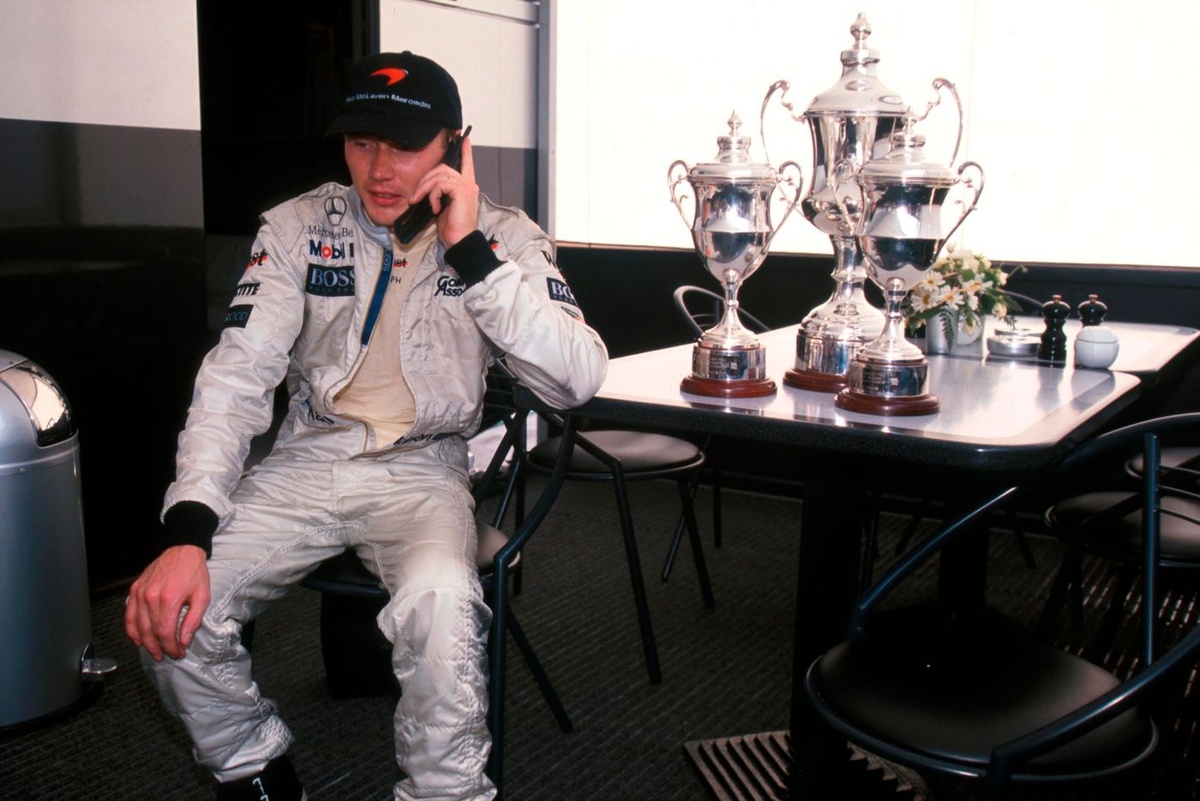
- Mika Häkkinen: European GP, 1997 and Australian GP, 1998*
- Lewis Hamilton: Canadian GP and United States GP, 2007
- Charles Leclerc: Belgian GP and Italian GP, 2019
- Andrea Kimi Antonelli: Chinese GP and Japanese GP, 2026
*Damon Hill and Mika Häkkinen actually achieved this milestone by winning their first three races consecutively: Hill in Hungary, Belgium, and Italy in 1993, and Häkkinen in Europe 1997, followed by Australia and Brazil in 1998. Should Antonelli prevail in Miami, he could join this exclusive group.
The Path of Success: Antonelli and his Contemporaries
Antonelli’s extraordinary achievement comes during a period of unprecedented competition in Formula 1. With the racing season expanding and team strategies becoming increasingly sophisticated, early wins have become increasingly crucial for young drivers. Antonelli recorded his first two victories within the first three races of only his second F1 season. This achievement parallels that of René Arnoux, Damon Hill, and Charles Leclerc, although both Antonelli and Leclerc had more races under their belts due to the elongated nature of modern seasons.
In contrast, Lewis Hamilton’s debut season was marked by gradual success, winning in his sixth and seventh races. This highlights the remarkable speed with which Antonelli has established himself in the sport.
Interesting cases like that of Bruce McLaren and Mika Häkkinen also add layers to the narrative. McLaren secured victories in the last race of the 1959 championship and the first race of 1960, thus clinching wins at the critical junction of the seasons. Häkkinen mirrored this trend by winning the closing race of 1997 and the opening round of 1998, showing that championship momentum can indeed carry over from one season to another.
A Unique Journey: The Road to Victory
Peter Collins stands out for having secured his initial consecutive victories in his fifth season, yet only clinched one more win in his final championship year. His journey underscores the difficulty many drivers face in maintaining consistency and the pressure they encounter to perform at elite levels. Collins’ experience affirms that while the ability to win is crucial, the ability to sustain success is often the steeper uphill battle.
Lastly, one intriguing question arises: has any driver managed to become world champion in the same year they first started winning races in quick succession? The answer is a nuanced one. The only case that partially fits is Mika Häkkinen, whose back-to-back wins occurred in the closing race of 1997 and the opening race of 1998. Thus, while no driver has emerged as champion in the exact year of their first consecutive wins, Häkkinen did achieve this distinction in the very year of his second back-to-back victory.
In summation, Kimi Antonelli’s early success in the world of Formula 1 is not merely a personal milestone but a remarkable event that deepens the rich tapestry of racing history. His drive to remain at the top will be an exciting narrative to follow, as he aims to duplicate the remarkable achievements of those who have come before him. With the ever-evolving nature of the sport, one can’t help but wonder what the future holds for this burgeoning star and the legacy he aims to create within the high-octane sphere of Formula 1 racing.