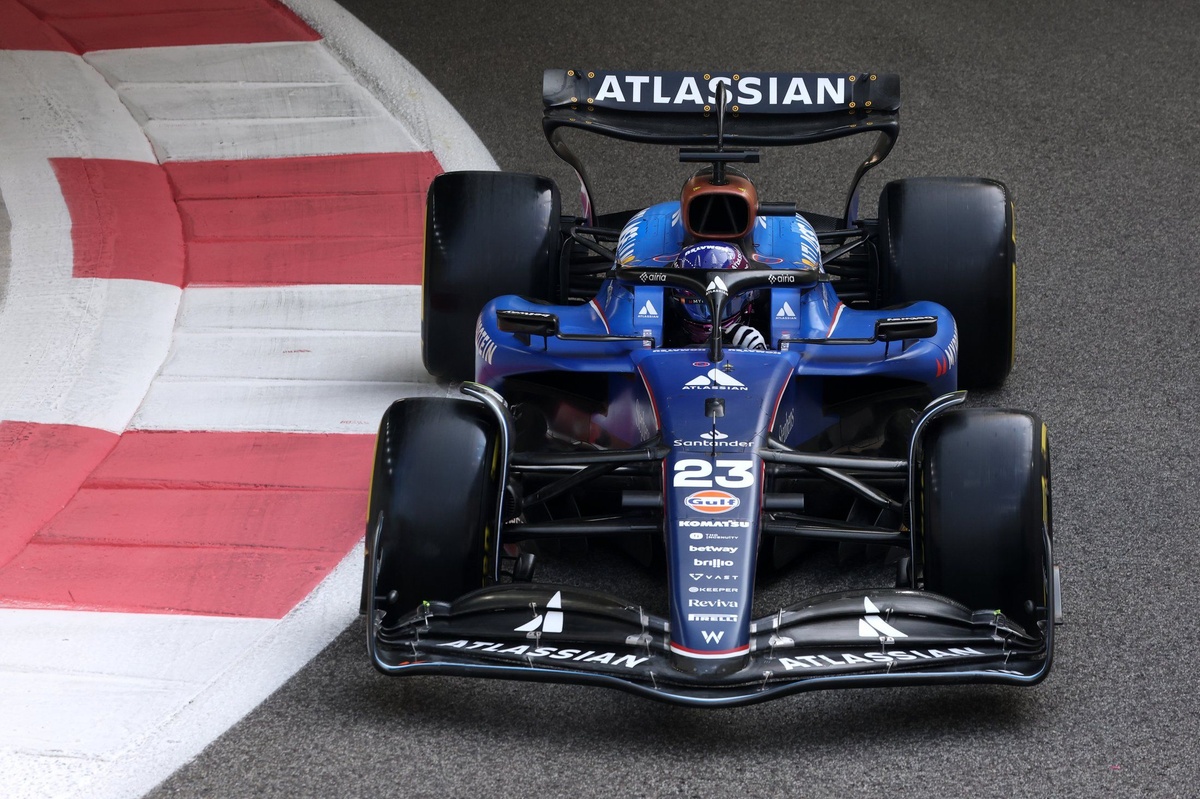
Alexander Albon: Reflections on F1’s 2026 Regulations and Safety Concerns
As the world of Formula 1 continues to evolve, the impending 2026 regulations are stirring significant discussions among drivers, teams, and fans alike. Alexander Albon, the Williams F1 driver, recently shared his insights on these regulations during a drivers’ briefing, emphasizing the safety implications posed by the new energy deployment and harvesting systems.
Understanding the Impacts of New Technology on Safety
The closing speeds between cars, particularly those deploying energy versus those harvesting it, have become a contentious issue. This concern was recently highlighted by a dramatic incident involving Oliver Bearman, a young driver whose Haas car experienced a catastrophic crash at Suzuka while attempting to navigate around Franco Colapinto’s Alpine. At a staggering speed of 308 km/h, Bearman’s car collided due to the significant speed differential—Colapinto’s vehicle was moving about 45 km/h slower.
Albon, who has been closely monitoring these developments, acknowledges that this phenomenon is intricately linked to the advancements in active aerodynamics and the various operational modes of different Formula 1 cars. Drivers have expressed frustration over the limited control they have over their vehicles under the new energy management systems. Lando Norris, another prominent driver, disclosed his own struggles, stating, “I didn’t even want to overtake Lewis [Hamilton]. It’s just that my battery deploys; I don’t want it to deploy, but I can’t control it.”
The Challenge Ahead: Drivers’ Concerns About Control
The essence of the driver’s concern revolves around the unpredictable nature of the new energy deployment systems. Albon elaborated on this during a post-race debrief, noting a palpable tension when defending against oncoming cars. He expressed his worries, stating, “We actually talked about that in the drivers’ briefing, just about the closing speeds and defending and moving and all these kinds of things. It feels really awkward now because you want to defend but you’re sometimes worried that the car behind—if they’re in control of their car.”
This lack of driver control, especially under extreme racing conditions, raises important questions regarding the safety protocols that Formula 1 must prioritize. Albon suggested that the implementation of measures to stabilize energy deployment systems, possibly akin to the more controlled nature of Drag Reduction Systems (DRS), could enhance safety on the track. “Maybe we just need to make SLM itself a bit more stable or less powerful or something like that,” he said, highlighting the potential for regulatory adjustments to enhance driver safety.
Suzuka: A Weekend of Challenges and Learning for Williams
Complicating matters further, Albon faced a challenging weekend at Suzuka, where he was eliminated in Q1 during qualifying. As a result, the team opted to treat the race as an extended test session, focusing on assessing energy deployment dynamics. “We wanted to test a few things with the front wing,” Albon explained, “and so we wanted to map some of the car during this five-week break to understand it better and go through some of the data.”
Despite the team’s proactive approach, they ultimately concluded that finishing with points was not realistic for that weekend. Albon stated, “We actually had quite a nice test plan in place. That meeting was basically, we do 10 laps like this, five laps like this… and we still had the same issue.” During the race, while some aspects worked well, as reflected in Albon’s initial competitive lap times, critical issues arose, prompting the team to pivot their strategy.
Williams’ Standing and Future Prospects
Currently, Williams sits at the bottom of the constructors’ championship standings, holding two points—trailing closely behind Cadillac and Aston Martin, with Audi just ahead on countback. The ongoing struggles for the historically significant team have prompted a re-evaluation of their technological approach and competitive strategy, particularly in light of the dramatic changes anticipated in 2026.
Understandably, the team faces an uphill battle in translating race weekend experiences into tangible improvements. With Albon’s candid assessments and a testing-oriented approach, Williams is striving to bridge the gap that currently separates them from midfield competitors.
Conclusion: Navigating the Future
As Formula 1 heads into a transformative phase with the 2026 regulations on the horizon, the voices of drivers like Alexander Albon are crucial in shaping a safe and competitive environment. The potential for hybrid technology to revolutionize racing dynamics brings excitement. Still, it also necessitates a deeper understanding of safety implications and the essential dialogue between regulatory bodies and drivers.
The upcoming seasons will be pivotal for teams like Williams, who are not only seeking to reclaim their stance in the competitive field but also to ensure that the thrill of Formula 1 remains coupled with the utmost commitment to safety for all participants. As Albon aptly noted, “We’re all in this together, and discussions like these are essential for our future.”
With the right adjustments and a commitment to dialogue, the world of Formula 1 stands poised to embrace an exhilarating yet safe future.