Max Verstappen’s Interest in Super GT: A Possible Future in Sportscar Racing?
Max Verstappen, the reigning four-time Formula 1 champion, has recently expressed an intriguing interest in taking part in Super GT, Japan’s renowned grand touring car championship. Despite this enthusiasm, he acknowledges the challenges posed by the format of the series, notably the absence of a standout event that could justify a guest appearance in the championship.
Super GT: The Pinnacle of Grand Touring Racing
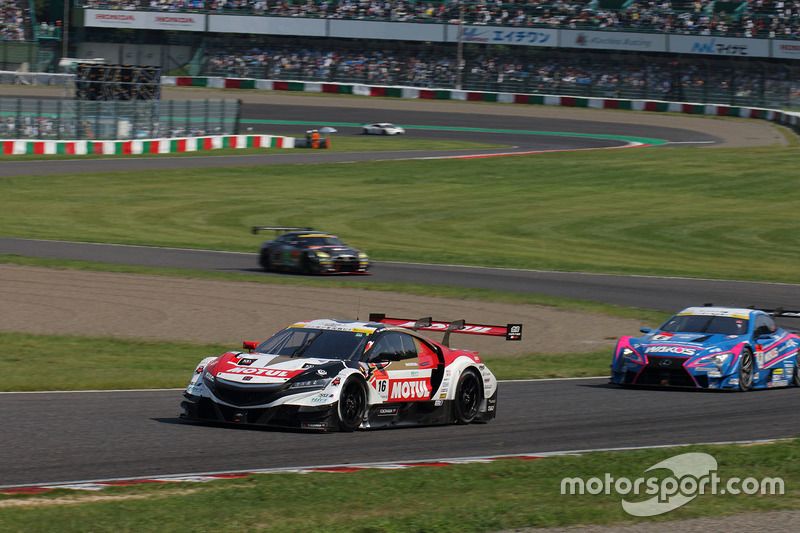
Super GT is widely recognized as one of the fastest and most competitive grand touring car championships globally. With its current GT500 machinery, competitors can achieve lap times that rival even those of the World Endurance Championship’s hypercars on tracks such as Fuji Speedway. Verstappen’s engagement with Super GT is not merely a fleeting curiosity; it reflects a deeper exploration of the sportscar racing landscape.
Last month, Verstappen had the opportunity to take the wheel of a Nissan Z GT500 car during a promotional shoot at Fuji Speedway, organized by his team, Red Bull Racing. This marked only his second experience driving a contemporary Super GT prototype, having previously tested a Honda NSX-GT at Motegi in 2022. While his time behind the wheel was limited by heavy rain, Verstappen was still able to appreciate the nuances of the championship and the capabilities of the Nissan Z.
“It was a lot of fun,” he remarked, noting the wet conditions that affected his running. “It’s a fantastic car and a fantastic category in general. It was a great experience for me to drive that car and also feel the grip in the wet.”
The Shift in Verstappen’s Racing Aspirations
As a driver who has achieved remarkable success in Formula 1, Verstappen has shown increasing interest in exploring alternative racing formats, particularly due to his frustrations with the current hybrid engines used in F1. Recently, he participated in the NLS2 race at the Nurburgring Nordschleife, driving a Mercedes-AMG GT3, further signaling his desire to engage with sportscar racing.
When discussing the possibility of entering Super GT, Verstappen hinted at the necessity of a marquee event within the series. “I wish they had a bit more of a standout one race, instead of just a championship,” he explained. He recognizes the challenges of committing to just one race within a larger series, suggesting that an iconic standalone event would provide a more compelling reason for participation.
The Need for a Signature Event
Verstappen’s observations bring attention to a significant gap in Super GT’s current structure. With eight races scheduled for the 2026 season across seven venues, there is a noticeable lack of differentiation among the events, most of which involve similar race formats—six are run over 300km, akin to a typical Grand Prix. The Fuji GT 3 Hours is currently the closest event to a marquee occasion, taking place during Japan’s Golden Week holiday.
Historically, Super GT did feature a standout race, the Suzuka 1000 km. This event began in 1966 as a standalone race before becoming an integral part of the Super GT calendar in 2006. Attracting numerous high-profile drivers, including former F1 champion Jenson Button, it helped elevate Super GT’s profile on the international stage. However, since the inception of the Suzuka 10 Hours as part of the Intercontinental GT Challenge, the original 1000 km race’s significance has diminished.
The Importance of Marquee Events
Marquee events not only attract top-level talent but also serve to elevate the entire championship’s visibility. When Button participated in the Suzuka 1000 km, it sparked his interest in Super GT and eventually led him to compete full-time, culminating in winning the GT500 title in 2018.
The absence of such prestigious races in Super GT today limits its appeal to international drivers, including Verstappen. The shift to endorse the Suzuka 10 Hours has shifted Super GT’s focus away from its traditional endurance format, affecting the influx of new talent and participation from established drivers.
The Road Ahead for Verstappen
Despite these challenges, there remains a potential pathway for Verstappen’s Super GT aspirations. The organizers floated the idea of a wildcard GT500 entry starting in 2026, particularly to support Malaysian talent during the return of the Sepang event. This entry could theoretically allow Verstappen to race during that event, which falls just between F1 races in Barcelona and Spielberg.
However, such a wildcard opportunity would require a committed manufacturer from one of the three GT500 manufacturers (Honda, Nissan, and Toyota) to supply and run the car. With Nissan having recently reduced its GT500 program from four to three cars, there is a possibility that they may consider a collaboration with Verstappen, especially given his recent test with the manufacturer’s car at Fuji.
Nonetheless, any potential participation from Verstappen will likely depend heavily on his future in Formula 1 and the ongoing discussions regarding improving the current hybrid package. His acknowledgment of the shortcomings of the present F1 machinery at venues like Suzuka underscores his growing discontent.
Conclusion: The Allure of Super GT
As Verstappen navigates this pivotal moment in his racing career, the allure of Super GT is hard to ignore. While he is currently committed to F1, many factors will come into play in determining his potential entry into sportscar events like Super GT. The championship’s needs for a signature event, combined with its exploration of international opportunities, may ultimately influence Verstappen’s decision.
In the coming years, as he weighs his options, it will be interesting to see whether Verstappen’s aspirations within Super GT materialize, marking a new chapter in his illustrious racing career. As the landscape of motorsport continues to evolve, the prospect of top drivers like Verstappen embracing diverse racing experiences could invigorate fan interest and reshape traditional racing narratives.